









For many researchers, submitting a paper to an international conference can seem like a complicated process. After months of conducting research, writing manuscripts, and preparing figures, the next challenge is navigating the conference submission and review system. One of the most widely used platforms for managing conference submissions is Microsoft CMT (Conference Management Toolkit).
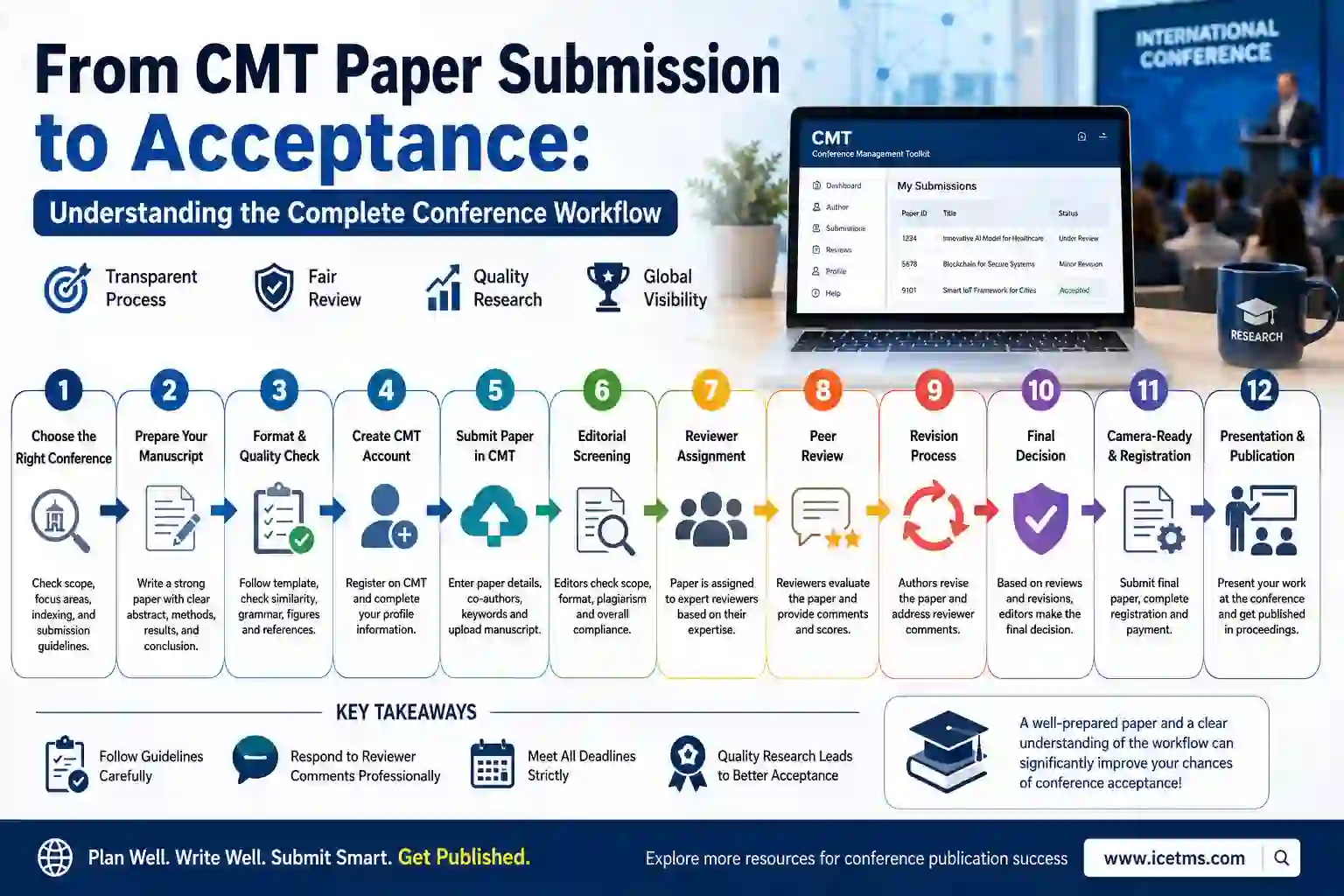
Understanding the complete workflow—from initial submission to final acceptance—not only reduces confusion but also improves your chances of success. This guide explains every stage of the conference publication process and provides practical tips to help researchers confidently move from CMT submission to conference acceptance.
If you are preparing your next conference paper, explore upcoming opportunities through the Call for Papers and learn how international conferences support research dissemination and academic networking.
Microsoft CMT (Conference Management Toolkit) is a web-based platform used by thousands of academic conferences worldwide to manage paper submissions, peer reviews, reviewer assignments, acceptance decisions, and communication with authors.
The platform streamlines the entire conference workflow while maintaining a structured and transparent review process.
New researchers can start with this detailed guide: Microsoft CMT Paper Submission Guide.
The publication journey begins before submission. Researchers should carefully evaluate conference scope, indexing, review quality, publication opportunities, and relevance to their research area.
Helpful resources:
Before submission, researchers must prepare a complete manuscript that follows conference guidelines.
Key components include:
Useful preparation guides:
Most conferences reject papers that fail to comply with formatting requirements. Before uploading your manuscript, verify:
Recommended resources:
Authors must register and create a Microsoft CMT account before submission. During registration, researchers provide personal information, affiliations, research interests, and contact details.
The conference organizer then grants access to the submission portal.
For a detailed walkthrough, read: How to Submit a Conference Paper Using CMT.
Once the submission portal opens, authors upload their manuscript and enter required metadata.
Typical submission information includes:
After successful submission, CMT generates a paper ID that will be used throughout the review process.
Before peer review begins, conference editors perform a preliminary evaluation.
During this stage they check:
Papers that fail basic requirements may receive desk rejection without external review.
Qualified reviewers are assigned based on expertise and research domains. Most conferences use double-blind or single-blind review systems to ensure fairness.
Reviewers evaluate:
This is the most important stage in the workflow. Reviewers submit detailed assessments and recommendations.
Typical recommendations include:
Understanding this stage helps researchers better navigate the Conference Paper Acceptance Process.
Most accepted papers require revisions. Authors receive reviewer feedback and are expected to address concerns professionally.
Common reviewer requests include:
Researchers should prepare a structured response document explaining how each comment has been addressed.
Learn more: How to Respond to Reviewer Comments.
After revision, editors review updated submissions and reviewer recommendations before making a final decision.
Possible outcomes include:
Acceptance notifications are typically sent via email and updated within the CMT dashboard.
Accepted authors must complete conference registration and submit a final camera-ready version.
At this stage, authors should:
Researchers often review Conference Registration and APC Fee Guidelines before completing registration.
Acceptance is not the end of the journey. Researchers must prepare to present their work effectively.
Preparation includes:
Helpful resources:
Understanding common mistakes can significantly improve acceptance rates.
Avoid these pitfalls by reviewing Common Mistakes in Conference Paper Submission.
Researchers increasingly use AI tools to improve writing quality, grammar checking, literature review support, and manuscript preparation.
Explore useful resources:
The journey from CMT paper submission to conference acceptance involves multiple stages, including manuscript preparation, formatting, submission, peer review, revision, final acceptance, registration, and presentation. Researchers who understand each phase can navigate the process more effectively and improve their chances of publication success.
Whether you are submitting your first paper or managing multiple conference publications, mastering the complete conference workflow will help you achieve better academic outcomes and professional recognition.
To explore upcoming publication opportunities, visit ICETMS, review the latest Call for Papers, and learn more about Conference Paper Publication.