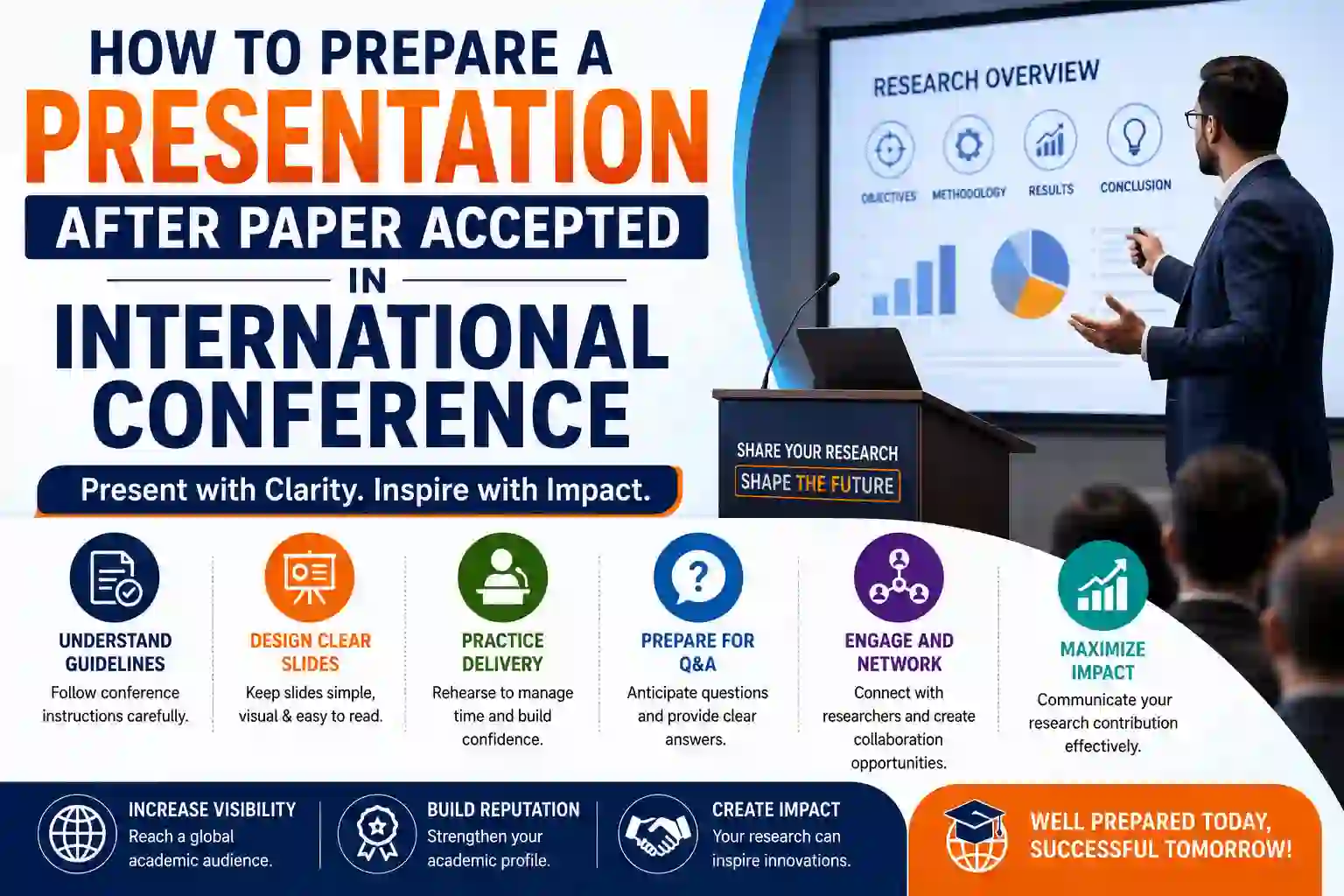
Getting a research paper accepted in an international conference is a major academic achievement. However, the next important step is preparing an effective conference presentation that clearly communicates the research contribution, methodology, and findings to conference audiences, reviewers, researchers, and industry professionals.
A professional conference presentation improves research visibility, strengthens academic networking opportunities, and enhances the overall impact of the published work.
Researchers looking for authentic conference publication opportunities can explore ICETMS International Conference Platform .
Why Conference Presentation Preparation Is Important
Many researchers focus only on paper acceptance and underestimate the importance of presentation quality. A well-prepared presentation helps researchers explain complex ideas clearly and create a strong professional impression during the conference session.
A strong presentation helps:
- Improve research visibility
- Increase networking opportunities
- Enhance academic reputation
- Attract future collaborations
- Explain research contributions clearly
- Build confidence during discussion sessions
Researchers can understand the importance of conference visibility through International Conference Website Research Visibility and Academic Networking .
1. Understand Conference Presentation Guidelines
After paper acceptance, conference organizers usually provide presentation instructions for authors. Researchers should carefully review:
- Presentation duration
- Slide limits
- Presentation format
- Online or offline mode
- Poster or oral presentation requirements
- Technical equipment instructions
Ignoring presentation guidelines can create technical issues during the conference session.
Researchers can track official conference updates through Call for Papers .
2. Focus on Key Research Contributions
Conference presentations should focus on the most important aspects of the research paper rather than explaining every technical detail from the manuscript.
Researchers should highlight:
- Research problem
- Research objectives
- Methodology overview
- Key findings
- Technical contribution
- Practical applications
- Future scope
Conference audiences usually prefer concise and visually engaging presentations.
3. Create a Professional Slide Structure
A well-organized slide structure improves audience understanding and presentation flow.
A standard conference presentation structure includes:
- Title Slide
- Introduction
- Research Problem
- Literature Review
- Methodology
- Experimental Results
- Discussion
- Conclusion
- Future Work
- Questions and Discussion
Researchers should maintain a clean and professional visual layout throughout the presentation.
4. Design Clear and Readable Slides
Slides should be simple, visually balanced, and easy to read from a distance.
Best practices include:
- Use readable fonts
- Avoid overcrowded slides
- Use consistent color themes
- Include diagrams and charts
- Highlight important findings
- Use bullet points instead of long paragraphs
Presentation design quality reflects the professionalism of the research work.
Researchers can improve document formatting through Best Practices for Conference Paper Formatting .
5. Explain Research Methodology Clearly
One of the most important parts of conference presentations is explaining the methodology in a simplified and understandable manner.
Researchers should:
- Use diagrams and flowcharts
- Explain algorithms step-by-step
- Avoid unnecessary complexity
- Focus on innovation and uniqueness
This is especially important in Artificial Intelligence, Machine Learning, Engineering, and Computer Science conferences.
Researchers interested in AI publication opportunities can explore Artificial Intelligence and Machine Learning Conference Research Publication .
6. Present Experimental Results Professionally
Results should be displayed clearly using:
- Graphs
- Charts
- Performance comparison tables
- Accuracy metrics
- Visualization images
Researchers should focus on explaining:
- Research improvements
- Performance gains
- Comparative analysis
- Technical significance
Well-presented results improve audience engagement and understanding.
7. Prepare a Strong Conclusion Slide
The conclusion slide should summarize the research contribution clearly and professionally.
A strong presentation conclusion should:
- Summarize key findings
- Highlight innovation
- Discuss practical applications
- Suggest future research scope
Researchers can improve conclusion preparation through How to Write a Strong Conclusion for Conference Paper .
8. Practice Presentation Delivery
Practice is essential for delivering a confident and professional conference presentation.
Researchers should:
- Practice multiple times
- Manage presentation timing
- Improve speaking clarity
- Maintain confidence
- Prepare for technical questions
Practicing helps reduce nervousness and improves communication quality during the conference session.
9. Prepare for Question and Answer Sessions
Conference presentations are usually followed by discussion and question sessions.
Researchers should be prepared to answer questions related to:
- Methodology
- Experimental setup
- Dataset selection
- Research limitations
- Future work
- Practical applications
Confident responses improve academic credibility and audience engagement.
10. Respond Professionally to Reviewer Feedback
Many conferences provide reviewer comments before final presentation sessions. Researchers should carefully analyze reviewer suggestions and improve their presentation accordingly.
Researchers can understand professional reviewer communication through How to Respond to Reviewer Comments for Conference Papers .
11. Avoid Common Presentation Mistakes
Many conference presentations fail to engage audiences because of avoidable mistakes.
Common mistakes include:
- Reading directly from slides
- Using excessive text
- Poor timing management
- Overcomplicated explanations
- Low-quality visuals
- Lack of preparation
- Ignoring audience interaction
Researchers can understand common submission and preparation errors through 10 Common Mistakes in Conference Paper Submission .
12. Understand the Conference Acceptance Process
Understanding how papers are reviewed and accepted helps researchers better align their presentations with reviewer expectations and conference standards.
Researchers can understand the peer review and evaluation workflow through Conference Paper Acceptance Process Explained .
13. Align Presentation With Published Paper
The presentation should remain consistent with the final accepted paper.
Researchers should ensure:
- Results match the final manuscript
- Figures remain accurate
- Methodology is consistent
- Research claims are supported
This improves professionalism and academic integrity.
14. Importance of Abstract and Introduction Slides
The introduction and abstract overview slides set the tone for the entire presentation.
Researchers should clearly explain:
- Research motivation
- Existing challenges
- Research gap
- Study objectives
Researchers can improve abstract writing through How to Write Abstract for International Conference .
15. Use Conference Presentations for Academic Networking
Conference presentations are valuable opportunities for building academic relationships and future collaborations.
Researchers should:
- Interact with attendees
- Discuss research ideas
- Exchange contact information
- Connect with industry experts
- Participate in technical discussions
Professional networking can support future research publication opportunities and collaborative projects.
16. Understand Conference Publication Opportunities
Many international conferences publish accepted papers in proceedings, journals, or indexing databases.
Researchers should understand:
- Publication process
- Indexing opportunities
- Camera-ready submission requirements
- Presentation obligations
Researchers can explore publication opportunities through Conference Paper Publication .
17. Final Presentation Preparation Checklist
- Slides completed professionally
- Presentation timing verified
- Figures and charts readable
- Technical content simplified
- Conclusion slide finalized
- Questions prepared
- Presentation rehearsed multiple times
- Backup copy saved
- Conference instructions reviewed
- Research contribution highlighted clearly
18. Prepare for Future Publication and Research Opportunities
Conference presentations often lead to:
- Journal publication invitations
- Research collaborations
- Funding opportunities
- Academic networking
- Industry partnerships
Researchers can understand broader publication opportunities through How to Publish Conference Papers .
Conclusion
Understanding how to prepare a presentation after paper accepted in international conference is essential for maximizing the impact of research publications and academic visibility. A professional presentation helps researchers communicate ideas effectively, engage with audiences, and strengthen academic credibility in international research communities.
By preparing organized slides, practicing delivery, presenting results clearly, and engaging professionally with conference participants, researchers can transform accepted papers into meaningful academic opportunities and successful conference experiences.