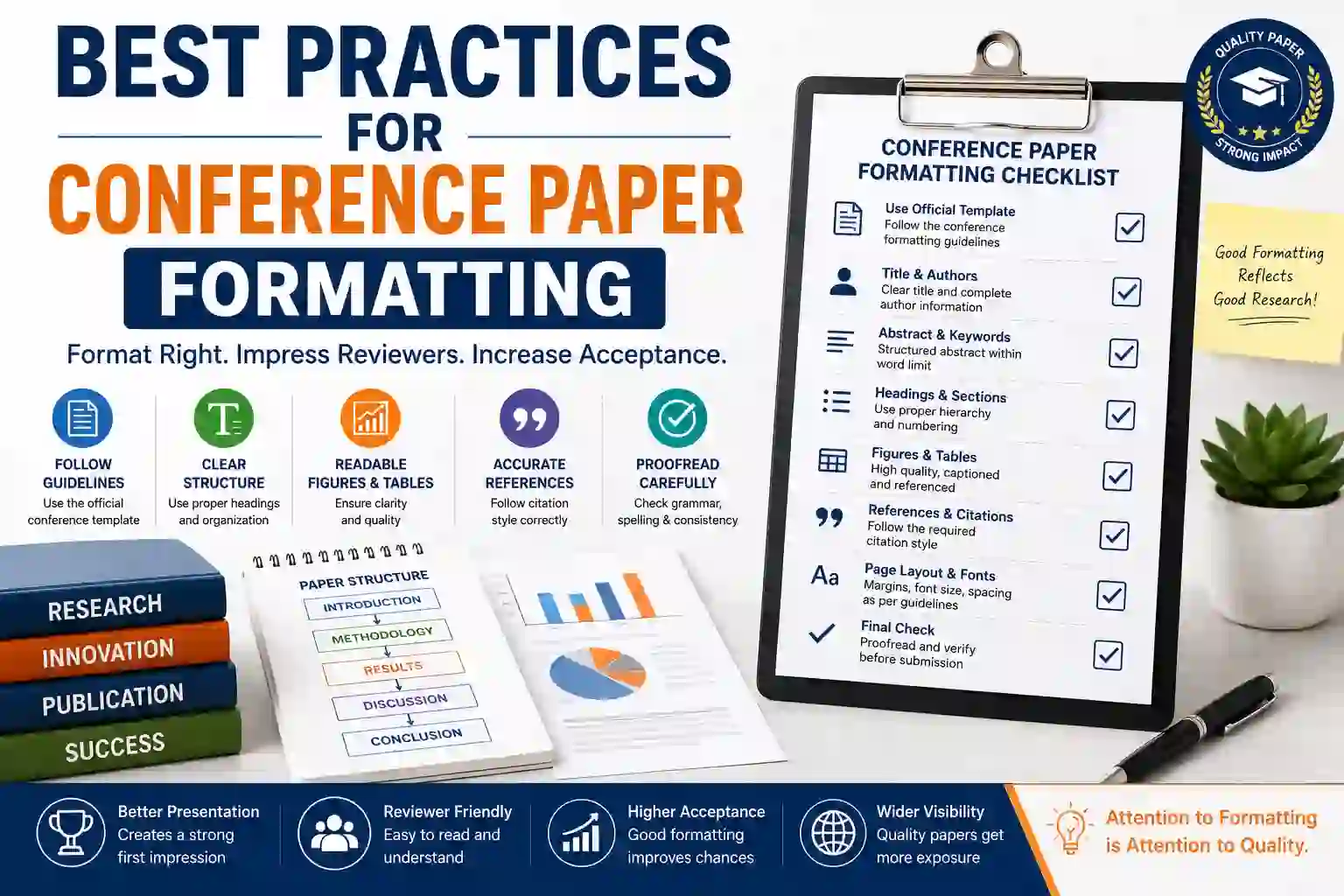
Conference paper formatting is one of the most important aspects of successful research paper submission. Even technically strong research papers can face rejection if formatting guidelines are ignored or presentation quality is poor.
International conferences follow strict formatting standards to maintain publication consistency, readability, and academic quality. Researchers who carefully format their papers improve reviewer confidence and increase the chances of conference paper acceptance and publication.
Researchers searching for publication opportunities can explore ICETMS International Conference Platform .
Why Conference Paper Formatting Is Important
Formatting is more than visual presentation. Proper formatting demonstrates professionalism, attention to detail, and academic discipline.
Well-formatted conference papers help:
- Improve readability
- Enhance reviewer experience
- Maintain publication standards
- Reduce technical errors
- Increase acceptance opportunities
- Support indexing and publication quality
Many conferences reject papers during initial screening because authors fail to follow formatting instructions correctly.
1. Always Use the Official Conference Template
Most international conferences provide official paper templates in Microsoft Word or LaTeX format. Researchers should always use the approved template instead of creating custom layouts.
Conference templates usually define:
- Page margins
- Font styles
- Heading structure
- Reference formatting
- Figure placement
- Table alignment
Researchers should download templates directly from official conference websites and carefully follow all instructions.
Researchers can verify authentic conference websites through International Conference Website for Conference Paper Publication .
2. Write a Clear and Professional Title
The paper title is the first element reviewers and readers notice. A strong title should:
- Be concise and descriptive
- Reflect research objectives
- Include important keywords
- Avoid unnecessary complexity
Titles with clear technical focus often perform better during peer review and indexing.
3. Format the Abstract Properly
The abstract is one of the most critical sections of a conference paper. Improperly formatted abstracts can negatively impact reviewer impressions.
A good abstract should include:
- Research problem
- Methodology
- Key findings
- Technical contribution
- Research significance
Most conferences also define:
- Word limits
- Keyword requirements
- Paragraph structure
- Formatting style
Researchers can improve abstract preparation through How to Write Abstract for International Conference .
4. Maintain Proper Heading Structure
Conference papers should use a clear and consistent heading hierarchy.
Typical structure includes:
- Title
- Abstract
- Introduction
- Literature Review
- Methodology
- Results and Discussion
- Conclusion
- References
Avoid inconsistent heading sizes, random formatting styles, or excessive capitalization.
5. Use Professional Fonts and Spacing
Most conference templates specify standard fonts such as:
- Times New Roman
- Arial
- Calibri
Researchers should verify:
- Correct font size
- Line spacing
- Paragraph alignment
- Column formatting
- Page numbering rules
Improper spacing and inconsistent fonts reduce document professionalism.
6. Format Figures and Tables Correctly
Figures and tables should be clear, readable, and professionally aligned.
Best practices include:
- High-resolution images
- Proper captions
- Sequential numbering
- Readable labels
- Consistent formatting
- Proper citation of borrowed visuals
Low-quality figures often create negative reviewer impressions.
7. Follow Reference and Citation Guidelines
Conference papers must follow the required citation and reference style carefully.
Common styles include:
- IEEE
- APA
- Springer
- ACM
- Elsevier formats
Researchers should ensure:
- Consistent citation format
- Complete publication details
- Updated references
- Proper in-text citations
- Accurate DOI information
Poor referencing is a common reason for reviewer criticism.
8. Avoid Common Formatting Mistakes
Many conference papers are rejected because of avoidable formatting errors.
Common mistakes include:
- Ignoring template instructions
- Incorrect margins
- Improper references
- Missing figure captions
- Inconsistent headings
- Overcrowded tables
- Grammar issues
- Broken equations
Researchers can learn more through 10 Common Mistakes in Conference Paper Submission .
9. Write a Strong Conclusion Section
The conclusion should summarize research findings clearly and professionally.
An effective conclusion should:
- Highlight major findings
- Discuss research significance
- Explain technical contribution
- Suggest future work
Researchers can improve conclusion writing through How to Write a Strong Conclusion for Conference Paper .
10. Prepare Papers for Reviewer Evaluation
Conference reviewers evaluate both technical quality and presentation quality.
Before submission, researchers should verify:
- Formatting consistency
- Research clarity
- Grammar quality
- Figure readability
- Reference accuracy
- Template compliance
Researchers can understand reviewer evaluation processes through Conference Paper Acceptance Process Explained .
11. Formatting in AI and Computer Science Conferences
Artificial Intelligence, Machine Learning, and Computer Science conferences often require:
- Algorithm formatting
- Code representation
- Mathematical equations
- Experimental comparison tables
- Performance visualization graphs
Researchers must ensure technical elements remain readable and correctly aligned within conference templates.
Researchers interested in AI publication opportunities can explore Artificial Intelligence and Machine Learning Conference Research Publication .
12. Proofreading and Language Quality
Formatting alone is not enough. Researchers should also carefully proofread the manuscript for:
- Grammar errors
- Spelling mistakes
- Sentence clarity
- Academic writing style
- Consistency in terminology
Professional language improves reviewer confidence and publication quality.
13. Understand Submission and Publication Requirements
Researchers should review all submission instructions before uploading the final paper.
Important checks include:
- PDF compatibility
- File naming rules
- Author information accuracy
- Page limit compliance
- Submission deadlines
Researchers can understand the submission workflow through Step-by-Step Guide to Submit Conference Paper Using CMT .
14. Importance of Proper Formatting for Research Visibility
Professionally formatted conference papers improve:
- Reader engagement
- Research visibility
- Indexing quality
- Academic credibility
- Citation opportunities
Researchers can learn more about research visibility through International Conference Website Research Visibility and Academic Networking .
15. Conference Papers vs Journal Papers Formatting
Conference paper formatting differs from journal formatting in several ways.
Conference papers generally:
- Have strict page limits
- Use conference-specific templates
- Require concise presentation
- Focus on rapid publication
Journal papers usually:
- Allow detailed explanations
- Include extended analysis
- Follow publisher-specific guidelines
- Support longer manuscripts
Researchers can explore these differences through Conference Paper vs Journal Paper: Key Differences .
16. Follow Official Call for Papers Carefully
Always review the official call for papers before formatting the manuscript.
Important details include:
- Formatting instructions
- Submission deadlines
- Paper categories
- Publication policies
- Conference themes
Researchers can verify submission requirements through Call for Papers .
17. Explore Multidisciplinary and Innovation Conferences
Modern conferences support multidisciplinary research across science, engineering, education, healthcare, management, and technology domains.
Researchers interested in innovation-focused publication opportunities can explore Innovation in Science and Technology International Conference and Research Publication .
Conclusion
Understanding the best practices for conference paper formatting is essential for successful conference paper publication and academic recognition. Proper formatting improves reviewer experience, strengthens paper presentation, and demonstrates professionalism in international research communities.
By carefully following templates, formatting guidelines, citation styles, and proofreading standards, researchers can significantly improve conference paper quality and increase acceptance opportunities in international conferences.