











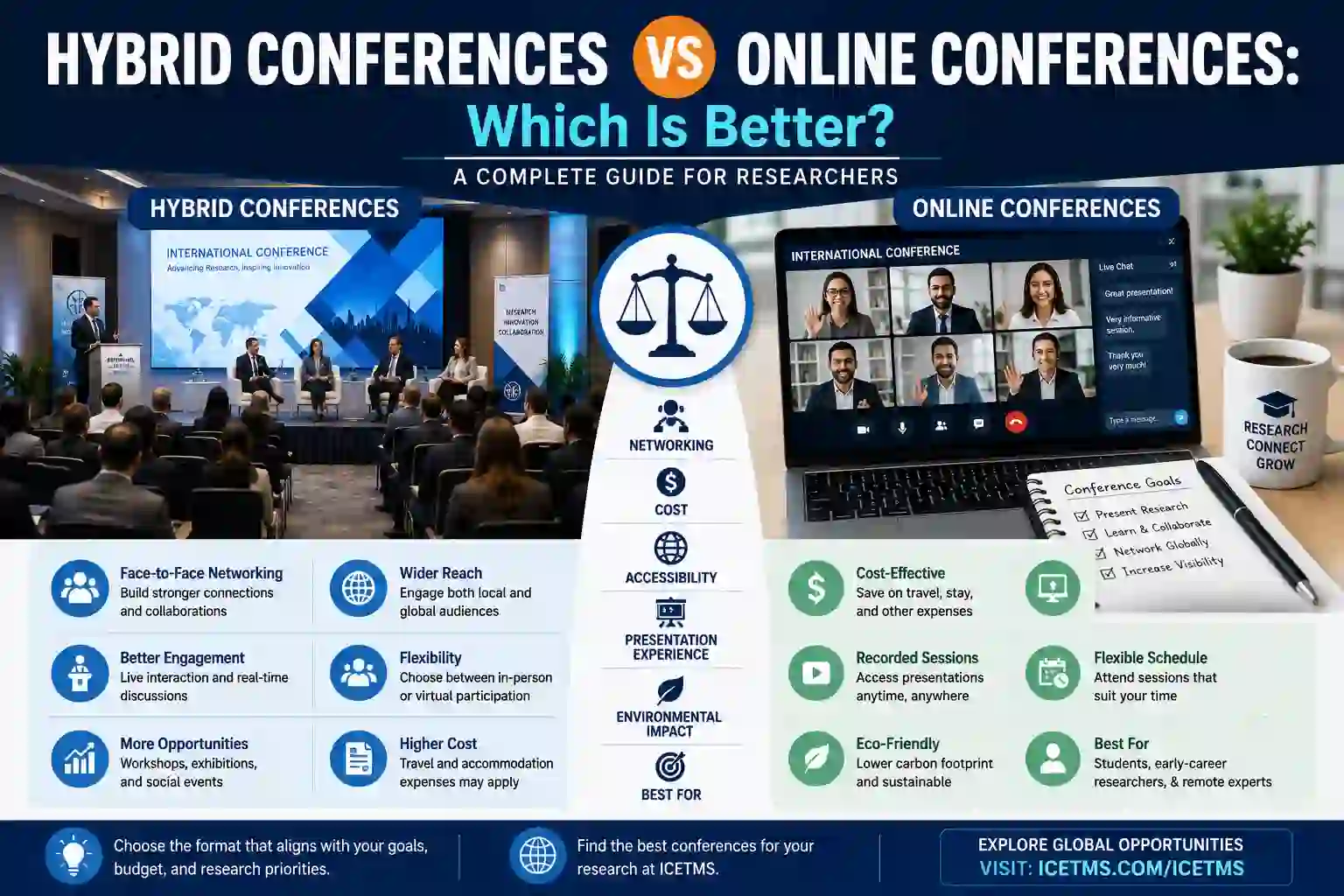
The conference landscape has evolved significantly over the past few years. While traditional in-person conferences remain valuable, researchers today have more options than ever before. Two of the most popular formats are hybrid conferences and online conferences. Both provide opportunities for researchers to present their work, publish conference papers, network with peers, and gain international exposure without necessarily following the conventional conference model.
However, many authors and researchers often ask: Which conference format is better—hybrid or fully online? The answer depends on several factors, including research goals, budget, networking requirements, publication objectives, and personal preferences.
This comprehensive guide compares hybrid conferences and online conferences to help researchers make informed decisions when selecting the best conference format for their academic and professional needs.
If you are searching for international conference opportunities, explore the ICETMS International Conference Platform, which connects researchers with global publication and presentation opportunities.
A hybrid conference combines both physical and virtual participation. Some attendees travel to the conference venue and participate in person, while others join remotely through digital platforms.
This format allows researchers to choose the participation method that best suits their circumstances.
Typical features of hybrid conferences include:
Hybrid conferences have become increasingly popular because they provide flexibility while maintaining many advantages of traditional academic events.
An online conference is conducted entirely through virtual platforms. Participants attend keynote sessions, technical presentations, workshops, and networking events remotely using computers, tablets, or smartphones.
Common online conference features include:
Online conferences eliminate geographical barriers and enable researchers from around the world to participate without travel.
Choosing the right conference format can directly affect your academic experience, networking opportunities, publication visibility, and overall return on investment.
Researchers should consider:
Before selecting a conference, it is important to understand the entire conference paper acceptance process and evaluate how each format aligns with your research objectives.
Online Conferences:
Online conferences offer maximum accessibility. Researchers can participate from virtually any location with an internet connection.
Benefits include:
Hybrid Conferences:
Hybrid conferences also provide flexibility, allowing attendees to choose between physical and virtual participation.
However, in-person attendees often gain additional benefits through direct interactions and networking opportunities.
Networking is one of the primary reasons researchers attend conferences.
Hybrid Conferences:
Hybrid conferences generally provide stronger networking opportunities because face-to-face interactions can foster deeper professional relationships.
Participants can:
Online Conferences:
Online networking is improving through virtual meeting rooms and AI-powered matchmaking tools, but it may not fully replicate the experience of in-person interactions.
Researchers focused on expanding professional visibility may benefit from resources available through International Conference Website Research Visibility and Academic Networking.
Cost is often a major factor when selecting a conference format.
Online Conferences:
Hybrid Conferences:
Researchers should also understand publication-related expenses discussed in International Conference APC and Registration Fees: Everything Researchers Need to Know.
Hybrid Conferences:
Researchers presenting in person often benefit from:
Online Conferences:
Online presentations offer convenience and flexibility but may experience technical challenges such as connectivity issues or platform limitations.
Researchers preparing presentations can benefit from How to Prepare a Presentation After Paper Acceptance.
Both formats can provide excellent publication and visibility opportunities when supported by reputable conference organizers.
Factors influencing visibility include:
Researchers interested in maximizing publication impact should explore Conference Paper Publication opportunities before submitting papers.
Online conferences generally have a lower environmental footprint because they eliminate travel-related emissions.
Hybrid conferences reduce environmental impact compared to fully physical conferences while still maintaining some in-person engagement.
For institutions prioritizing sustainability, online conferences often present an attractive option.
For students and early-career researchers, online conferences often provide a cost-effective entry point into academic publishing and presentation.
Benefits include:
Students preparing their first paper should review:
Experienced researchers often benefit more from hybrid conferences because of the enhanced networking and collaboration opportunities.
Hybrid formats allow established researchers to:
Ask yourself the following questions:
The answers will help determine which conference format aligns best with your needs.
There is no universal answer to whether hybrid conferences or online conferences are better. Both formats offer unique advantages and serve different researcher needs.
Online conferences provide affordability, accessibility, and convenience, making them ideal for students, early-career researchers, and individuals with limited travel resources. Hybrid conferences offer stronger networking opportunities, greater flexibility, and enhanced collaboration potential while still accommodating virtual participation.
Ultimately, the best choice depends on your research goals, budget, networking priorities, and professional development objectives. By carefully evaluating these factors, researchers can select the conference format that maximizes both academic impact and career growth.
To discover upcoming international conferences and publication opportunities, visit the Call for Papers page and explore the latest opportunities available through ICETMS.