











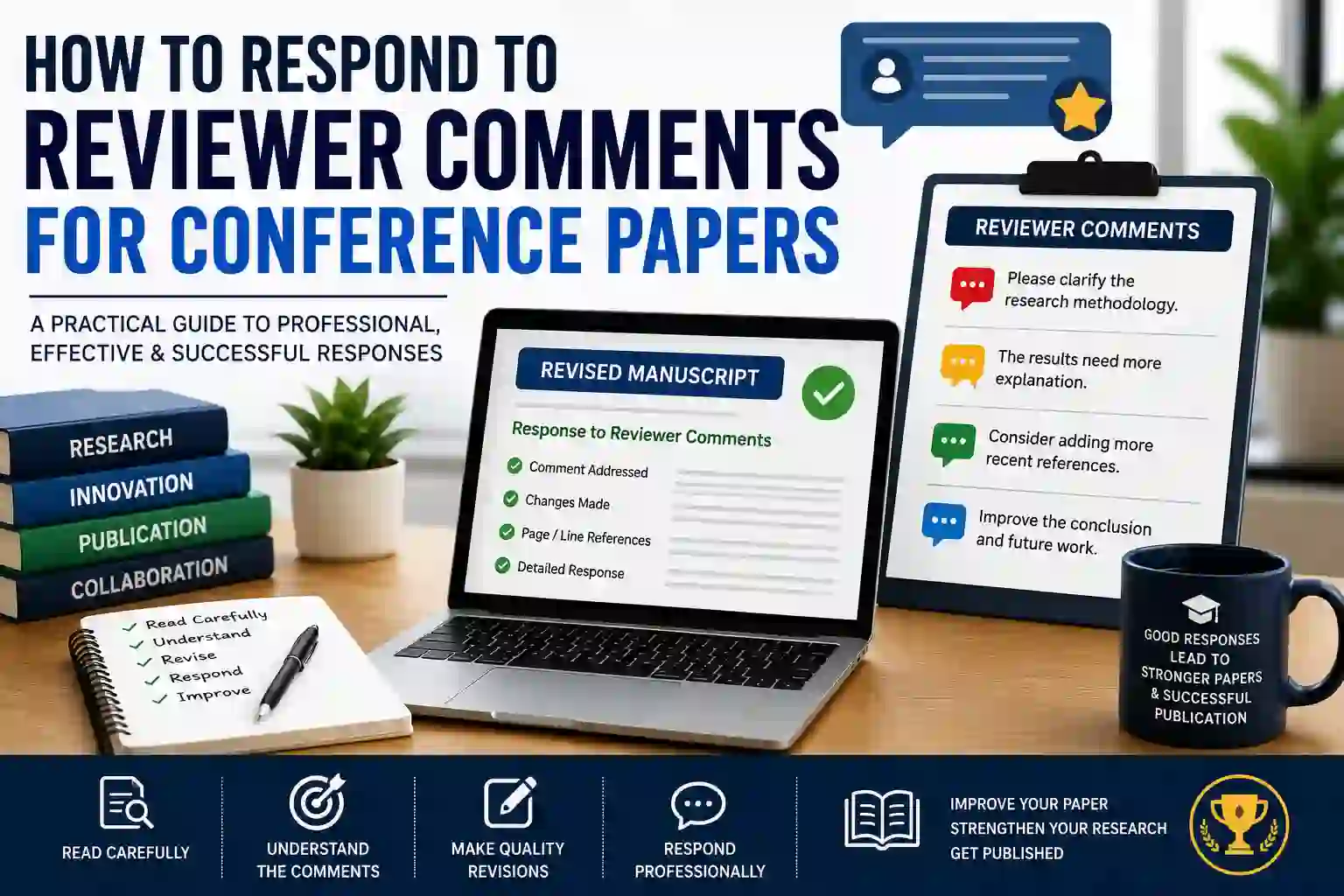
Submitting a research paper to an international conference is an important step in academic publishing, but receiving reviewer comments can sometimes feel challenging for researchers, students, academicians, and scientists. Understanding how to respond to reviewer comments for conference papers professionally and effectively is essential for improving publication success and maintaining strong academic credibility.
Reviewer feedback is not meant to discourage authors. Instead, it helps improve research quality, clarity, originality, methodology, and overall presentation before final publication in conference proceedings or research journals.
Researchers looking for conference publication opportunities can explore ICETMS International Conference Platform .
The peer review process is one of the most important quality-control mechanisms in academic publishing. Reviewers evaluate submitted papers to ensure:
Reviewer comments help authors strengthen their research papers before final acceptance and publication.
Researchers interested in conference publication guidance can read Conference Paper Publication .
Conference paper reviewers may provide comments related to different aspects of the research paper. Some of the most common reviewer suggestions include:
Understanding reviewer expectations helps researchers prepare more professional and publication-ready manuscripts.
One of the biggest mistakes researchers make is reacting emotionally to reviewer criticism. Even critical comments should be treated as opportunities to improve research quality.
Before responding:
Professional communication creates a positive impression on reviewers and conference editors.
Always maintain respectful and professional language while replying to reviewer comments.
Example:
“Thank you for your valuable suggestion. We have revised the methodology section accordingly and clarified the experimental process.”
Polite responses demonstrate academic professionalism and collaboration.
Never ignore reviewer comments. Respond to each point separately, even if the comment appears minor.
A structured response format improves readability and helps reviewers evaluate revisions quickly.
Mention exactly what modifications were implemented in the revised manuscript.
For example:
Clear explanations make the review process smoother and increase acceptance chances.
Sometimes researchers may respectfully disagree with reviewer suggestions. In such cases:
Professional disagreement is acceptable when supported by valid scientific reasoning.
Many conference papers are rejected because authors submit incomplete revisions. Carefully review:
Researchers can also explore How to Publish Conference Papers for detailed submission guidance.
Peer review ensures that international conferences maintain academic standards and publication quality. Strong peer review systems improve:
Researchers should always choose conferences with transparent review and publication policies.
Researchers can learn more about selecting authentic conference platforms through International Conference Website for Conference Paper Publication .
Reviewer feedback often strengthens the final quality of research papers. Through revision and correction, authors can:
Many high-quality conference and journal papers achieve strong research impact because of effective peer review and revision processes.
The review process for conference papers and journal papers often differs in terms of review depth and publication timelines.
Conference papers usually:
Journal papers generally:
Researchers can better understand these differences through Conference Paper vs Journal Paper: Key Differences .
In rapidly evolving fields such as Artificial Intelligence, Machine Learning, Data Science, and Computer Science, reviewer comments often focus on:
Researchers working in AI and Machine Learning domains can explore Artificial Intelligence and Machine Learning Conference Research Publication .
Responding professionally to reviewer comments not only improves publication success but also strengthens academic relationships with editors, reviewers, and conference organizers.
International conferences provide opportunities for:
Researchers can understand more about conference networking benefits through International Conference Website Research Visibility and Academic Networking .
Many international conferences invite researchers to submit original research papers, review articles, technical papers, and innovation-based studies across engineering, science, technology, healthcare, and multidisciplinary domains.
Researchers can explore upcoming conference submission opportunities through the Call for Papers section.
Modern conferences increasingly support interdisciplinary collaboration and innovation-driven research. Researchers from multiple domains work together to solve global scientific and technological challenges.
Innovation-focused researchers can explore Innovation in Science and Technology International Conference and Research Publication .
Understanding how to respond to reviewer comments for conference papers is essential for successful research publication and academic growth. Reviewer feedback helps improve research quality, technical clarity, scientific validity, and publication standards.
By responding professionally, addressing comments carefully, and revising manuscripts thoroughly, researchers can significantly improve conference paper acceptance chances and strengthen their academic credibility. Effective communication with reviewers is not only part of the publication process but also an important skill for long-term academic and professional success.