











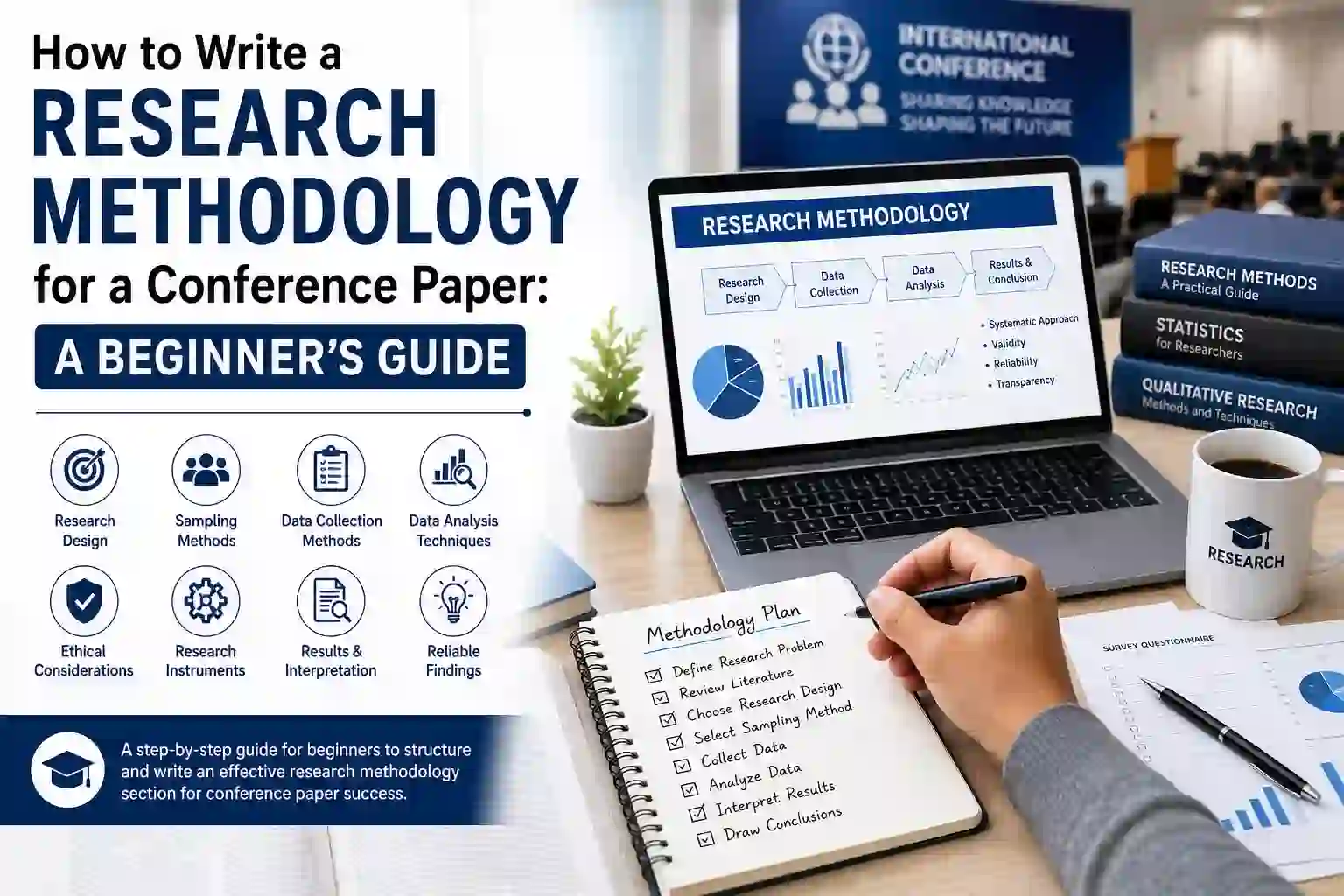
One of the most important sections of any conference paper is the research methodology. While many researchers focus heavily on writing the introduction, literature review, and results sections, the methodology often determines whether reviewers consider the research credible and scientifically sound.
For first-time authors, writing a methodology section can seem intimidating. Questions such as "What should I include?", "How much detail is enough?", and "What do conference reviewers expect?" are common among students and early-career researchers.
This beginner-friendly guide explains everything you need to know about writing an effective research methodology for a conference paper. You will learn what a methodology is, why it matters, how to structure it properly, common mistakes to avoid, and practical examples that can improve your chances of conference paper acceptance.
If you are planning to publish your research in an international conference, consider exploring opportunities through ICETMS International Conference and Research Publication Platform.
A research methodology is a detailed explanation of the methods, techniques, tools, and procedures used to conduct research. It describes how data was collected, how participants or samples were selected, and how the collected information was analyzed to answer the research questions.
Simply put, the methodology section answers the question:
How was this research conducted?
The purpose of the methodology section is to provide transparency. Readers and reviewers should be able to understand the research process and evaluate whether the methods used are appropriate for the study.
A strong methodology also allows future researchers to replicate the study or build upon the findings.
Conference reviewers evaluate hundreds of submissions. One of the key factors they examine is whether the research methodology is valid and appropriate.
A well-written methodology helps:
Understanding the conference paper acceptance process can help researchers appreciate why methodology is such a critical component of a successful submission.
In a typical conference paper structure, the methodology section appears after the literature review and before the results section.
A standard conference paper often follows this format:
If you have not yet completed your background research, you may find this guide helpful: How to Write a Literature Review for an International Conference.
A comprehensive methodology section generally consists of several important components.
The research design explains the overall strategy used to conduct the study.
Common research designs include:
Example:
This study employed a quantitative survey-based research design to investigate the impact of artificial intelligence tools on student learning outcomes.
Researchers working in advanced technologies can explore opportunities through Artificial Intelligence and Machine Learning Conference Research Publication.
The methodology should align with the objectives of the study.
Examples of research objectives include:
Clearly defined objectives help justify your methodological choices.
This section describes who or what was studied.
You should include:
Popular sampling techniques include:
Example:
A sample of 300 undergraduate students was selected using stratified random sampling from three universities.
Explain how data was collected.
Common methods include:
Example:
Data was collected through an online questionnaire distributed to participants using institutional email systems.
The more clearly you describe your data collection process, the easier it becomes for reviewers to evaluate the reliability of your research.
Research instruments are the tools used to gather information.
Examples include:
If you developed your own questionnaire, explain how it was validated and tested for reliability.
Once data is collected, researchers must explain how it was analyzed.
Quantitative analysis methods may include:
Qualitative analysis methods may include:
Example:
Data was analyzed using SPSS software. Descriptive statistics and multiple regression analysis were employed to identify relationships among variables.
Ethical research practices are increasingly important in academic publishing.
Researchers should mention:
Example:
All participants provided informed consent before participating in the study. Personal information was anonymized to ensure confidentiality.
One of the most common questions among beginner researchers is whether they should use qualitative or quantitative methods.
Quantitative research focuses on numerical data and statistical analysis.
Examples include:
This approach is ideal when researchers want measurable and statistically significant results.
Qualitative research focuses on understanding experiences, opinions, and behaviors.
Examples include:
This approach is useful when exploring complex social, behavioral, or organizational phenomena.
Mixed methods combine quantitative and qualitative approaches to provide a broader understanding of the research problem.
Many modern conference papers use mixed methods because they offer both statistical evidence and contextual insights.
Below is an example suitable for a conference paper:
Methodology: This study adopted a quantitative research design to investigate the relationship between artificial intelligence adoption and student academic performance. Data was collected from 350 undergraduate students through an online survey consisting of 25 Likert-scale questions. Participants were selected using stratified random sampling. Data analysis was conducted using SPSS Version 29. Descriptive statistics, correlation analysis, and regression techniques were applied to identify significant relationships among variables. Ethical approval was obtained from the institution, and participant confidentiality was maintained throughout the study.
Many conference papers are rejected because of weaknesses in the methodology section.
Avoid these common mistakes:
Additional submission-related mistakes are discussed in Common Mistakes in Conference Paper Submission.
To create a methodology section that impresses conference reviewers, follow these recommendations:
Proper formatting can significantly improve reviewer impressions. Review these Best Practices for Conference Paper Formatting before submission.
A strong methodology is only one part of a successful conference paper. Authors should also focus on creating a compelling abstract, thorough literature review, strong conclusions, and professional presentation materials.
Useful resources include:
The research methodology section is one of the most important parts of a conference paper because it explains how the research was conducted and why the results can be trusted. A clear, detailed, and logically organized methodology demonstrates academic rigor and increases the likelihood of conference paper acceptance.
By carefully describing your research design, sampling strategy, data collection methods, instruments, analytical techniques, and ethical considerations, you create a strong foundation for your study and help reviewers evaluate its quality.
Whether you are preparing your first conference submission or aiming to publish in a leading international conference, mastering methodology writing is an essential skill that will support your long-term research success.
To discover upcoming conferences, publication opportunities, and academic networking resources, visit Conference Paper Publication and explore the latest Call for Papers announcements.