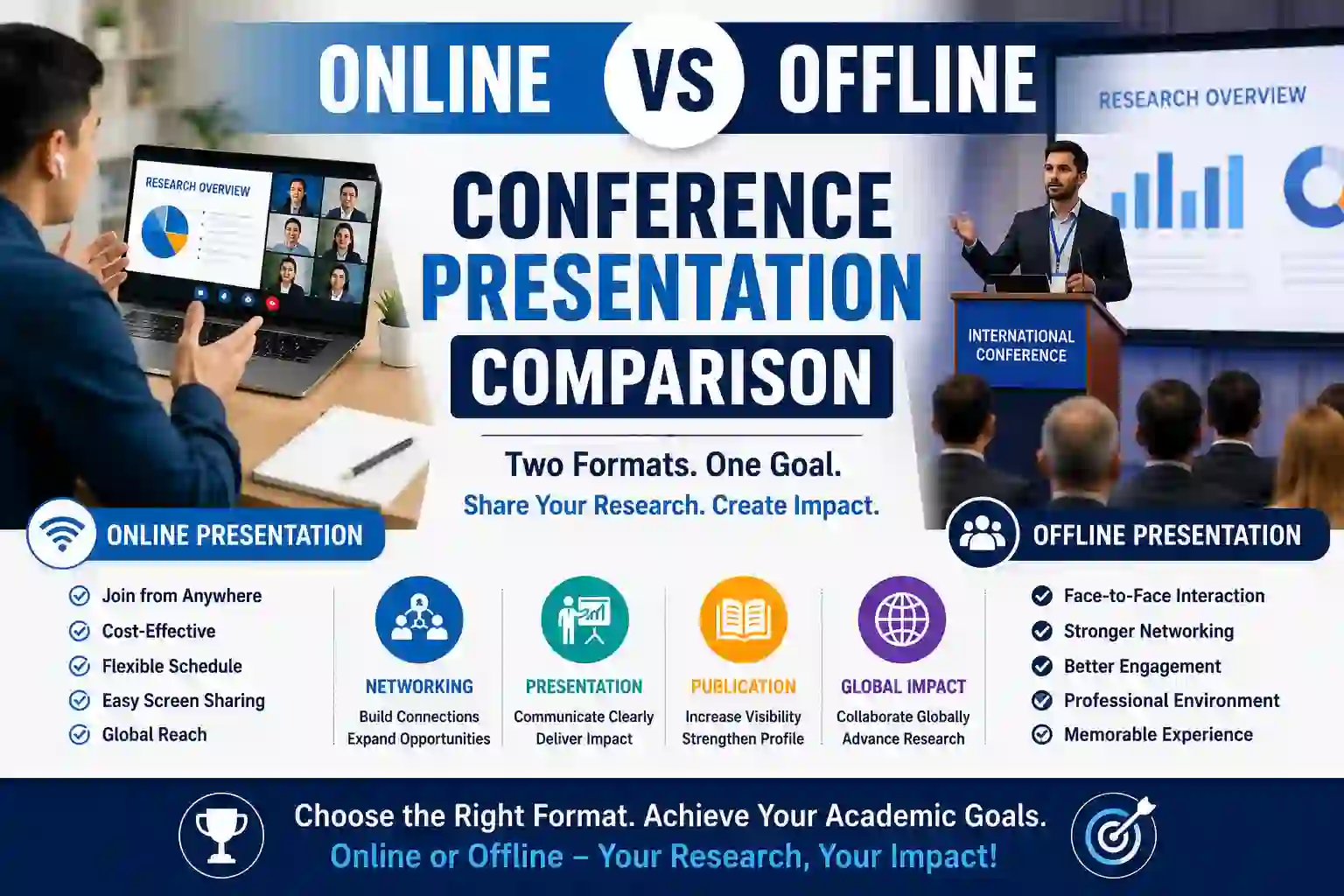
International conferences have evolved significantly in recent years, especially with the rapid growth of online and hybrid academic events. Researchers today often have the option to present their accepted conference papers either online or offline depending on conference policies, travel possibilities, budget, and professional goals.
Understanding the differences between online and offline conference presentations helps researchers select the most suitable participation method for research visibility, academic networking, and professional growth.
Researchers looking for international publication opportunities can explore ICETMS International Conference Platform .
What Is an Online Conference Presentation?
An online conference presentation is conducted virtually using platforms such as Zoom, Google Meet, Microsoft Teams, or specialized conference systems. Researchers present their work remotely from their own location without physically attending the conference venue.
Online presentations usually include:
- Live virtual presentations
- Recorded video presentations
- Screen sharing slides
- Online question-and-answer sessions
- Virtual networking rooms
What Is an Offline Conference Presentation?
An offline conference presentation requires researchers to physically attend the conference venue and present their research in front of a live audience.
Offline conferences generally include:
- Physical presentation sessions
- Face-to-face networking
- Panel discussions
- Poster presentations
- Workshops and technical sessions
Researchers can explore conference publication opportunities through Conference Paper Publication .
1. Accessibility and Convenience
Online Conference Advantages
- No travel required
- Lower participation cost
- Easy international participation
- Flexible attendance options
- Suitable for remote researchers
Offline Conference Advantages
- Better conference experience
- Professional academic environment
- Direct interaction with experts
- Hands-on workshops and discussions
Online conferences are especially useful for students and researchers with travel or visa limitations.
2. Networking Opportunities
Networking is one of the biggest differences between online and offline conferences.
Offline Networking Benefits
- Face-to-face communication
- Direct interaction with professors
- Industry collaboration opportunities
- Research partnership discussions
- Stronger professional relationships
Online Networking Limitations
- Limited informal interaction
- Short networking sessions
- Lower audience engagement
- Reduced spontaneous discussion
Researchers can understand the importance of networking through International Conference Website Research Visibility and Academic Networking .
3. Cost Comparison
Cost is one of the main reasons many researchers prefer online conference participation.
Online Conference Costs
- Lower registration fees
- No travel expenses
- No accommodation costs
- No visa expenses
Offline Conference Costs
- Travel expenses
- Hotel and accommodation
- Local transportation
- Food and additional expenses
For researchers with limited funding, online conferences provide affordable publication and presentation opportunities.
4. Presentation Experience
Presentation delivery differs significantly between online and offline modes.
Online Presentation Experience
- Comfortable home environment
- Reduced stage fear
- Easy screen sharing
- Dependence on internet quality
- Possible technical interruptions
Offline Presentation Experience
- Live audience interaction
- Better speaker engagement
- Professional conference atmosphere
- Stronger communication impact
Researchers can improve conference presentation quality through How to Prepare a Presentation After Paper Accepted in International Conference .
5. Technical Challenges
Online conferences depend heavily on technology and internet stability.
Common Online Challenges
- Internet connection issues
- Audio and video problems
- Screen-sharing errors
- Software compatibility problems
- Time zone difficulties
Common Offline Challenges
- Travel delays
- Venue navigation
- Presentation equipment issues
- Scheduling conflicts
Researchers should always prepare backup plans for both presentation modes.
6. Audience Engagement Comparison
Offline conferences generally provide stronger audience engagement because participants can interact directly with speakers.
Offline Engagement Benefits
- Better eye contact
- Live audience feedback
- Interactive discussions
- More focused attention
Online Engagement Limitations
- Virtual distractions
- Lower interaction levels
- Limited audience participation
- Reduced communication impact
7. Research Visibility and Exposure
Both online and offline conferences can improve research visibility when organized by authentic international conference platforms.
However, offline conferences often provide stronger visibility because researchers can:
- Meet journal editors
- Discuss collaborations directly
- Participate in networking sessions
- Interact with keynote speakers
Researchers can explore authentic conference websites through International Conference Website for Conference Paper Publication .
8. Publication Value and Academic Recognition
In most cases, conference publication quality depends more on the conference reputation and peer review process than on whether the presentation is online or offline.
Researchers should focus on:
- Conference indexing
- Review quality
- Publication standards
- Conference credibility
Researchers interested in AI and Computer Science publication opportunities can explore Artificial Intelligence and Machine Learning Conference Research Publication .
9. Preparation Differences
Preparation strategies differ for online and offline presentations.
Online Preparation Tips
- Test microphone and camera
- Verify internet stability
- Practice screen sharing
- Use professional backgrounds
- Keep backup presentation files
Offline Preparation Tips
- Practice stage delivery
- Prepare printed notes
- Carry backup USB drives
- Arrive early at venue
- Check presentation equipment
10. Common Mistakes Researchers Make
Researchers often make avoidable mistakes during conference presentations.
Common issues include:
- Poor slide design
- Overcrowded content
- Weak communication skills
- Lack of practice
- Ignoring audience interaction
- Technical unpreparedness
Researchers can understand common conference mistakes through 10 Common Mistakes in Conference Paper Submission .
11. Which Conference Mode Is Better?
The best conference mode depends on the researcher's goals, budget, location, and networking priorities.
Choose Online Conferences If:
- You want affordable participation
- You cannot travel internationally
- You prefer flexible attendance
- You need quick publication opportunities
Choose Offline Conferences If:
- You want strong networking opportunities
- You prefer face-to-face discussions
- You want international exposure
- You seek professional academic interaction
12. Importance of Proper Paper Preparation
Regardless of conference mode, successful presentations begin with a strong research paper.
Researchers should focus on:
- Paper formatting
- Strong abstract writing
- Clear conclusions
- Research originality
- Technical quality
Researchers can improve paper preparation through:
- How to Write Abstract for International Conference
- How to Write a Strong Conclusion for Conference Paper
- Best Practices for Conference Paper Formatting
13. Conference Acceptance and Reviewer Expectations
Conference acceptance depends on technical quality, originality, formatting, and reviewer evaluation standards.
Researchers can understand acceptance criteria through:
Conclusion
The comparison between online vs offline conference presentation shows that both formats offer unique advantages for researchers. Online conferences provide affordability, accessibility, and flexible participation, while offline conferences deliver stronger networking opportunities, audience engagement, and professional interaction.
Researchers should select the conference presentation mode based on their academic goals, budget, publication objectives, and networking requirements. Regardless of presentation format, strong research quality, professional preparation, and effective communication remain the key factors for successful conference participation and research visibility.