











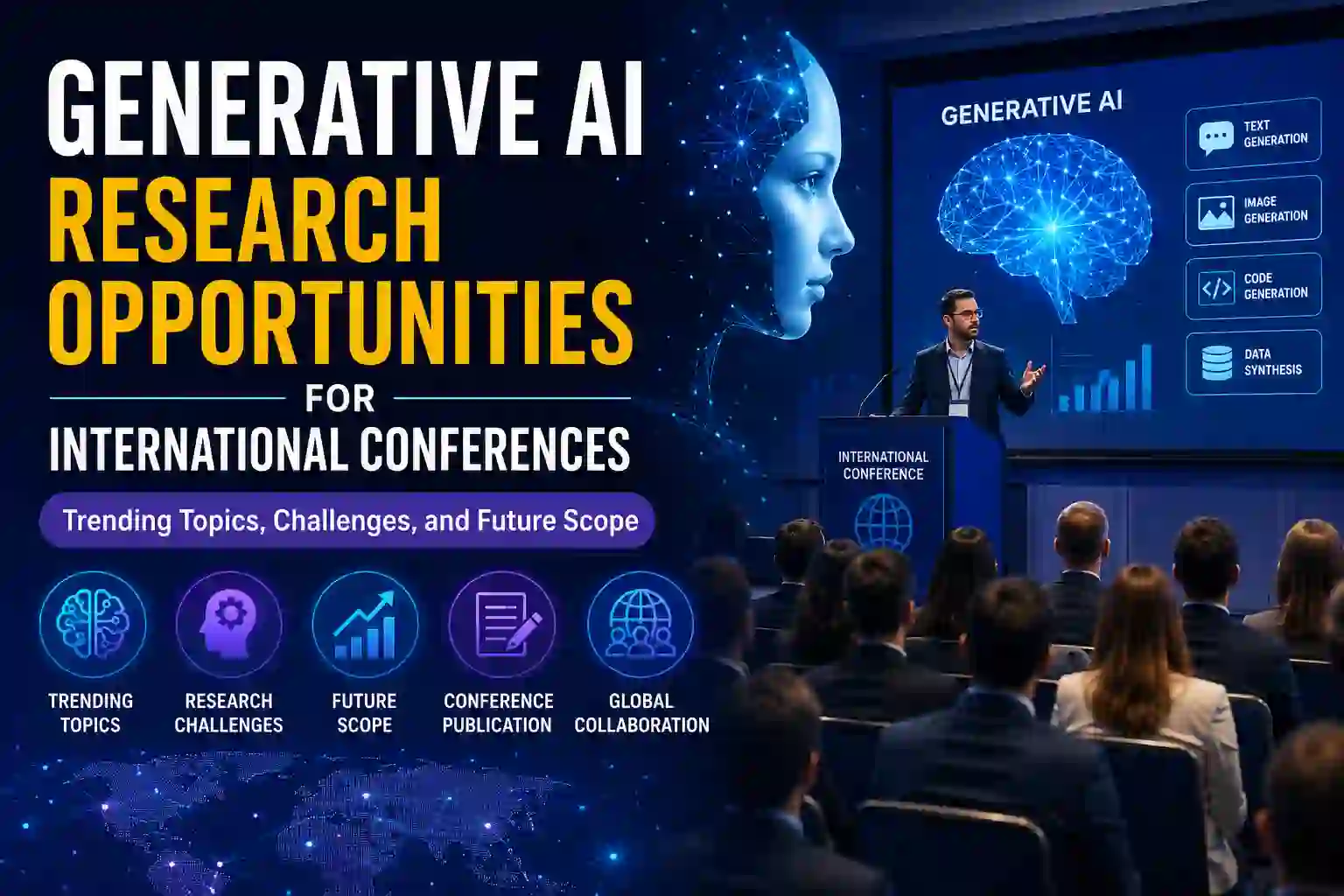
Generative Artificial Intelligence (Generative AI) has rapidly transformed from an emerging technology into one of the most influential research domains worldwide. From AI-powered content creation and intelligent chatbots to synthetic data generation and multimodal systems, Generative AI is opening new possibilities across industries and academic disciplines.
As universities, research institutions, and technology companies continue investing heavily in AI innovation, international conferences have become important platforms for presenting groundbreaking findings and collaborating with global experts. Researchers seeking impactful publication opportunities should carefully explore emerging Generative AI topics that align with current academic and industrial needs.
If you are planning to submit your research paper to an international conference, platforms such as ICETMS International Conference provide opportunities to showcase innovative research in Artificial Intelligence, Machine Learning, Data Science, and related fields.
The popularity of Generative AI stems from its ability to create text, images, videos, code, music, and even scientific insights using advanced deep learning models. Technologies such as Large Language Models (LLMs), diffusion models, transformers, and multimodal AI systems have created unprecedented opportunities for academic research.
Researchers participating through an international conference website for conference paper publication are increasingly focusing on Generative AI due to its interdisciplinary applications across healthcare, education, cybersecurity, finance, robotics, and scientific computing.
Large Language Models remain among the hottest conference research topics. Researchers are exploring:
For additional AI topic ideas, researchers can explore Artificial Intelligence Research Topics for International Conferences.
Modern AI systems can process and generate multiple data formats simultaneously, including text, images, audio, and video. Research opportunities include:
Healthcare applications continue attracting significant academic attention. Researchers are studying:
Generative AI is increasingly being used to accelerate scientific discoveries. Potential conference topics include:
As AI adoption grows, transparency becomes increasingly important. Research areas include:
Despite remarkable advancements, Generative AI faces several challenges that offer valuable research opportunities for conference publications.
AI systems are highly dependent on training data quality. Poor datasets often result in inaccurate outputs, fairness concerns, and model bias.
Large Language Models occasionally generate false or misleading information, creating reliability concerns in critical applications.
Researchers continue investigating methods to protect sensitive information while maintaining model performance.
Training advanced generative models requires significant computational resources, making efficiency optimization an important research area.
The use of copyrighted content for model training remains an ongoing legal and ethical challenge.
The future of Generative AI extends far beyond current applications. Several emerging directions are expected to dominate future international conferences.
Researchers looking for broader innovation opportunities can also review Innovation in Science and Technology International Conference and Research Publication.
A successful conference paper requires more than selecting a trending topic. Researchers should focus on originality, methodology, evaluation, and practical impact.
Before beginning your study, understand existing research gaps by following this guide on How to Write Literature Review for International Conference.
Establish measurable objectives and experimental procedures using recommendations from How to Write Research Methodology for Conference Paper.
Your abstract is often the first section reviewers read. Follow the guidance available in How to Write Abstract for International Conference.
Conference formatting errors can lead to rejection. Review Best Practices for Conference Paper Formatting.
Ensure originality by following How to Reduce Plagiarism in Academic Writing.
After completing your research paper, selecting the right conference becomes crucial. Researchers can review the latest Call for Papers and identify conferences aligned with their research interests.
Those focusing specifically on AI can explore Artificial Intelligence and Machine Learning Conference Research Publication opportunities and discover the Best International Conference for Artificial Intelligence and Machine Learning Research Publication.
Most conferences use Microsoft CMT or similar systems for paper management. Researchers can learn the complete workflow through:
Avoid common mistakes by reviewing Common Mistakes in Conference Paper Submission.
Researchers can significantly improve productivity using modern AI tools. Explore the list of 15 Best Free AI Tools for International Conference Paper Writing.
Generative AI continues to redefine the future of research, innovation, and technological advancement. The field offers countless opportunities for researchers seeking impactful conference publications, from Large Language Models and multimodal systems to trustworthy AI and scientific discovery applications.
By selecting relevant research topics, addressing practical challenges, and following proper publication strategies, researchers can maximize their chances of conference acceptance and academic recognition. As international conferences increasingly prioritize AI innovation, now is an excellent time to contribute meaningful research to this rapidly evolving domain.
Whether you are a student, PhD scholar, academic researcher, or industry professional, Generative AI presents exciting opportunities to create high-impact conference papers and contribute to the future of intelligent systems.