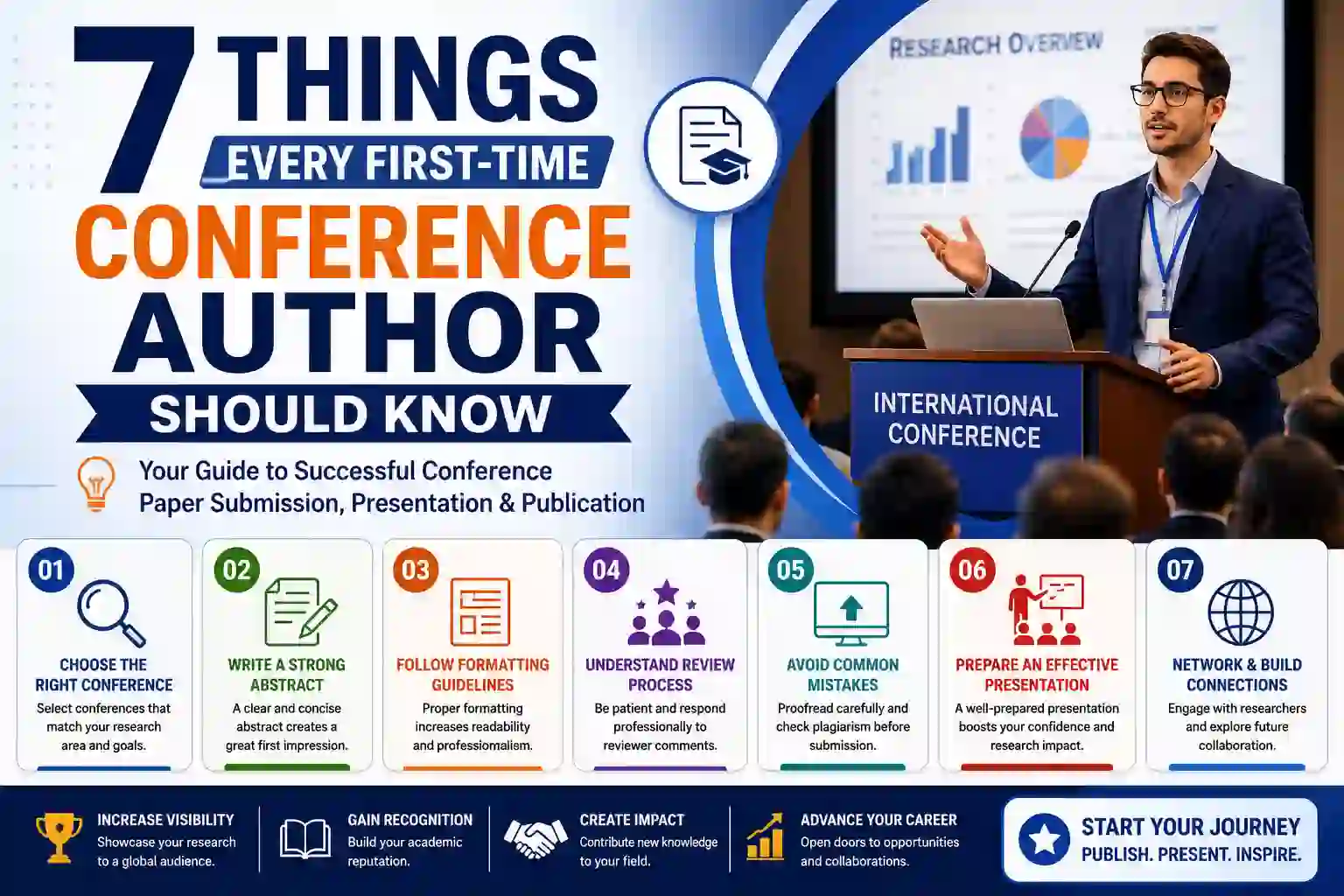
Submitting your first conference paper can feel exciting, challenging, and sometimes overwhelming. Many first-time conference authors are unsure about paper formatting, conference selection, reviewer expectations, presentation preparation, and publication procedures.
Understanding the academic conference process before submission can significantly improve your chances of paper acceptance and successful publication in an international conference.
Researchers looking for authentic publication opportunities can explore ICETMS International Conference Platform .
Why First-Time Conference Authors Need Proper Guidance
International conferences are highly competitive, especially in areas like Artificial Intelligence, Computer Science, Engineering, Education, and Medical Research. Many research papers are rejected because authors lack knowledge about conference expectations and submission standards.
Proper preparation helps researchers:
- Improve paper quality
- Avoid common submission mistakes
- Understand reviewer expectations
- Increase acceptance chances
- Improve presentation confidence
- Build academic networking opportunities
1. Selecting the Right International Conference Is Important
One of the biggest mistakes first-time authors make is submitting papers to conferences that do not match their research topic or academic goals.
Before submission, researchers should verify:
- Conference scope
- Research tracks
- Indexing information
- Publication opportunities
- Review process
- Submission deadlines
Researchers can explore authentic conference opportunities through International Conference Website for Conference Paper Publication .
2. Abstract Writing Can Determine First Impressions
The abstract is often the first section reviewers evaluate. A weak abstract can reduce reviewer interest even if the research work is technically strong.
A good conference abstract should clearly explain:
- Research problem
- Objectives
- Methodology
- Results
- Research contribution
Researchers can improve abstract quality through How to Write Abstract for International Conference .
3. Conference Paper Formatting Matters
Many first-time conference authors underestimate the importance of formatting guidelines. Improper formatting creates a negative impression and may even lead to desk rejection.
Common formatting mistakes include:
- Incorrect font size
- Improper margins
- Broken references
- Low-quality figures
- Missing sections
- Improper citation style
Researchers can learn proper formatting techniques through Best Practices for Conference Paper Formatting .
4. Reviewer Comments Should Be Taken Seriously
Receiving reviewer comments is a normal part of academic publishing. First-time authors should understand that reviewer feedback helps improve research quality.
Researchers should:
- Respond professionally
- Address every reviewer comment
- Provide technical clarification
- Revise carefully
- Avoid emotional responses
Researchers can improve reviewer communication through How to Respond to Reviewer Comments for Conference Papers .
5. Avoid Common Conference Submission Mistakes
Many conference papers are rejected because authors ignore basic submission standards.
Common mistakes include:
- Submitting incomplete papers
- Weak research contribution
- Grammar and spelling errors
- Poor formatting
- Plagiarism issues
- Missing references
- Late submissions
Researchers can avoid these issues through 10 Common Mistakes in Conference Paper Submission .
6. Understanding the Conference Acceptance Process Helps
First-time authors often become anxious after paper submission because they do not understand the review and acceptance process.
Most conferences follow these stages:
- Initial screening
- Peer review evaluation
- Reviewer recommendations
- Revision requests
- Final acceptance decision
- Camera-ready submission
Researchers can understand this workflow through Conference Paper Acceptance Process Explained .
7. Presentation Skills Are Equally Important
Conference publication is not only about paper submission. Researchers must also present their work professionally during conference sessions.
A strong presentation improves:
- Research visibility
- Academic networking
- Collaboration opportunities
- Professional recognition
Researchers can improve presentation quality through How to Prepare a Presentation After Paper Accepted in International Conference .
Online vs Offline Conference Participation
Modern conferences often provide both online and offline presentation options for researchers worldwide.
Online conferences provide:
- Lower costs
- Flexible participation
- Remote accessibility
Offline conferences provide:
- Better networking
- Face-to-face communication
- Professional conference experience
Researchers can compare both formats through Online vs Offline Conference Presentation Comparison .
Importance of Research Quality and Originality
First-time authors should focus on originality and technical quality instead of simply trying to publish quickly.
Reviewers evaluate:
- Research novelty
- Methodology strength
- Experimental validation
- Practical contribution
- Technical depth
High-quality research improves conference acceptance opportunities and academic reputation.
Conference Papers vs Journal Papers
Many beginners are confused about the difference between conference papers and journal publications.
Conference papers usually focus on:
- Early-stage research
- Recent innovations
- Fast publication cycles
- Presentation opportunities
Researchers can understand the differences through Conference Paper vs Journal Paper: Key Differences .
AI and Computer Science Conference Opportunities
Artificial Intelligence and Computer Science conferences are among the fastest-growing academic conference categories worldwide.
These conferences provide opportunities for:
- AI research publication
- Machine Learning innovation
- Software engineering discussions
- Technical collaboration
- Industry networking
Researchers interested in AI conferences can explore Artificial Intelligence and Machine Learning Conference Research Publication .
Final Checklist Before Submission
Before submitting a conference paper, first-time authors should verify:
- Formatting quality
- Grammar accuracy
- Reference correctness
- Plagiarism checks
- Abstract clarity
- Conclusion quality
- Submission guidelines
Researchers can follow a detailed checklist through Ultimate Checklist Before Submitting Your Research Paper in International Conference .
Conclusion
Understanding these 7 things every first-time conference author should know can help researchers confidently prepare, submit, revise, and present their research papers in international conferences.
Successful conference publication requires proper planning, strong research quality, careful formatting, professional communication, and effective presentation skills. By understanding conference expectations and avoiding common mistakes, first-time authors can improve their publication success and build strong academic careers.