











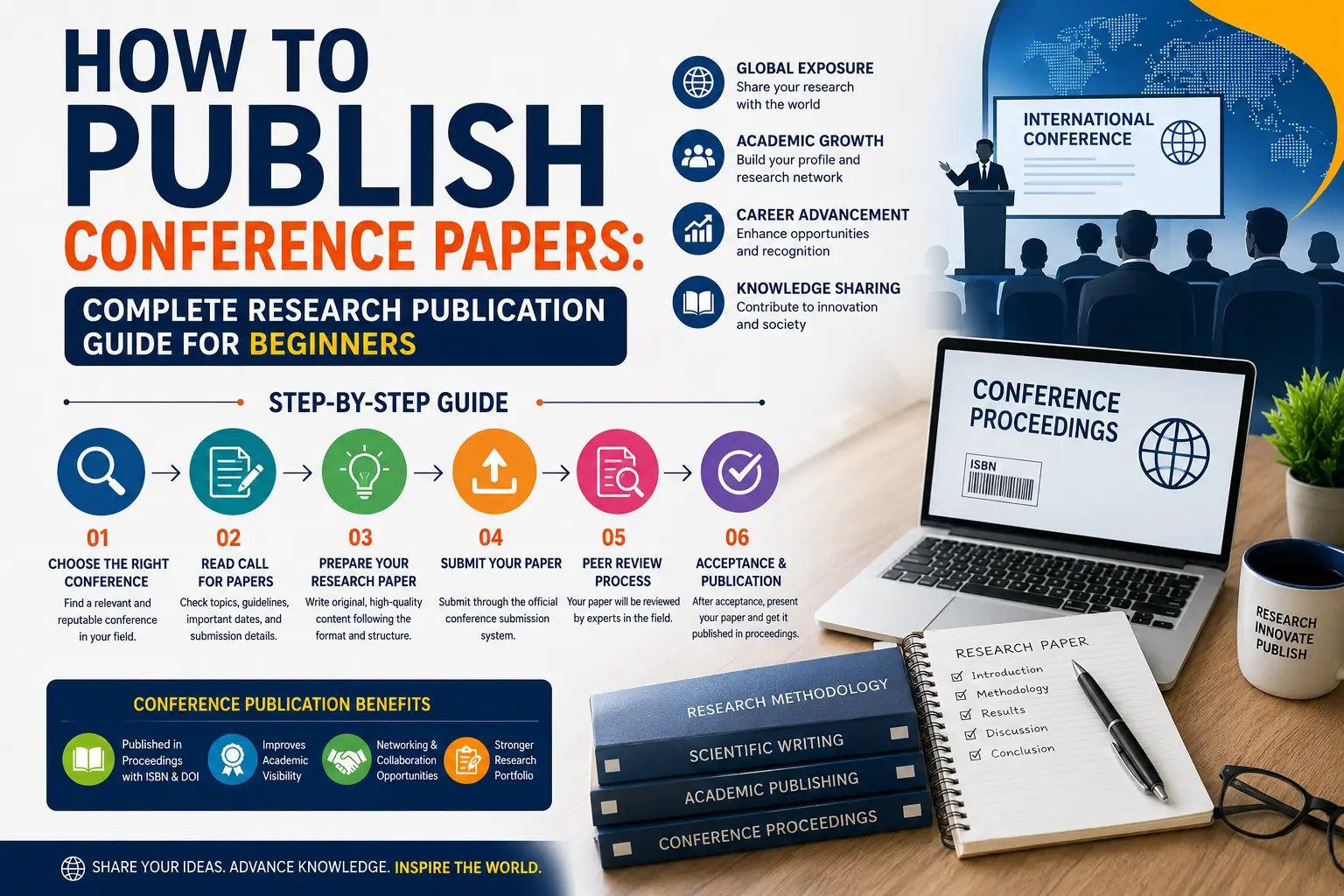
Publishing research papers in an international conference is one of the most effective ways to share academic knowledge, present innovative ideas, and build a strong research profile. For students, scholars, academicians, and industry professionals, conference paper publication creates opportunities for global recognition, networking, and academic growth.
Today, researchers across engineering, science, technology, management, education, and interdisciplinary fields actively participate in international conferences to present original research and contribute to scientific advancement. However, many beginners are often confused about the exact process of publishing a conference paper successfully.
This guide explains the step-by-step process of conference paper publication, important preparation tips, common mistakes to avoid, and how researchers can improve their chances of paper acceptance.
Researchers looking for multidisciplinary conference publication opportunities can explore ICETMS Conference Proceedings, an international platform dedicated to research paper publication and academic collaboration.
A conference paper is a research article submitted to an academic conference for review and presentation. Once accepted, the paper is generally published in conference proceedings with ISBN and DOI, making the research accessible to the global academic community.
Unlike general online articles, conference papers undergo an evaluation process where experts review the originality, methodology, technical quality, and contribution of the research.
Conference paper publication helps researchers:
An international conference is more than just a presentation event. It acts as a global academic platform where researchers from different countries exchange ideas, discuss emerging technologies, and collaborate on innovative research.
Participation in international conferences offers several advantages:
Modern conferences now focus heavily on emerging areas such as Artificial Intelligence, Machine Learning, Sustainable Development, Healthcare Innovation, and multidisciplinary research.
Researchers interested in innovation-focused research topics can also explore Innovation in Science and Technology for publication and research opportunities.
Selecting the correct conference is the foundation of successful publication.
Before submitting a paper, researchers should evaluate:
A genuine conference always provides clear submission guidelines, publication details, and conference objectives.
Researchers should avoid predatory or fake conferences that promise publication without proper peer review.
Upcoming conference opportunities and publication announcements can be found through ICETMS 2026 and related conference pages.
Every conference releases a Call for Papers (CFP) that explains:
Understanding the CFP is essential because each conference follows specific formatting and submission requirements.
Researchers should carefully review the official Call for Papers Page before preparing the manuscript.
Ignoring formatting instructions or submission rules may result in immediate rejection.
The quality of the research topic strongly influences paper acceptance.
A strong conference paper should:
Topics related to innovation and modern technologies usually receive greater attention during review.
Popular research domains include:
A professional conference paper should be clear, organized, and technically strong.
Most conference papers contain:
Researchers should maintain:
Well-structured research papers are easier for reviewers to evaluate and understand.
Originality is one of the most important requirements in conference paper publication.
Authors should:
Most conferences reject papers with high plagiarism percentages.
Maintaining research ethics improves both publication quality and academic credibility.
Conference papers are usually submitted through online systems such as:
During submission, researchers provide:
Authors should carefully verify all details before final submission.
After submission, the paper enters the peer-review stage.
Experts review the paper based on:
Reviewers may:
Constructive reviewer comments help authors improve research quality.
Many papers require revision before final acceptance.
Researchers should:
Careful revisions significantly increase acceptance chances.
Once accepted, authors present their work during the conference.
Presentations allow researchers to:
Modern conferences often support:
This increases accessibility for international participants.
After successful presentation, papers are published in conference proceedings.
Conference publications generally include:
High-quality papers may also be recommended for journal publication opportunities.
Many conference papers are rejected due to:
Researchers should carefully follow submission guidelines and maintain academic standards.
Conference publication continues to evolve with digital technology and global collaboration.
Current trends include:
Researchers who adapt to these changes gain greater academic opportunities and visibility.
Publishing research papers in an international conference is an excellent opportunity for researchers to share innovative ideas, gain academic recognition, and contribute to global scientific advancement. Understanding the complete conference paper publication process helps authors improve their chances of successful publication and professional growth.
From selecting the right conference to preparing quality research work and responding to peer review, every step plays an important role in academic success.
Researchers seeking multidisciplinary conference publication opportunities and innovation-focused academic platforms can explore:
Conference paper publication remains one of the strongest pathways for academic visibility, research collaboration, and long-term professional development.